
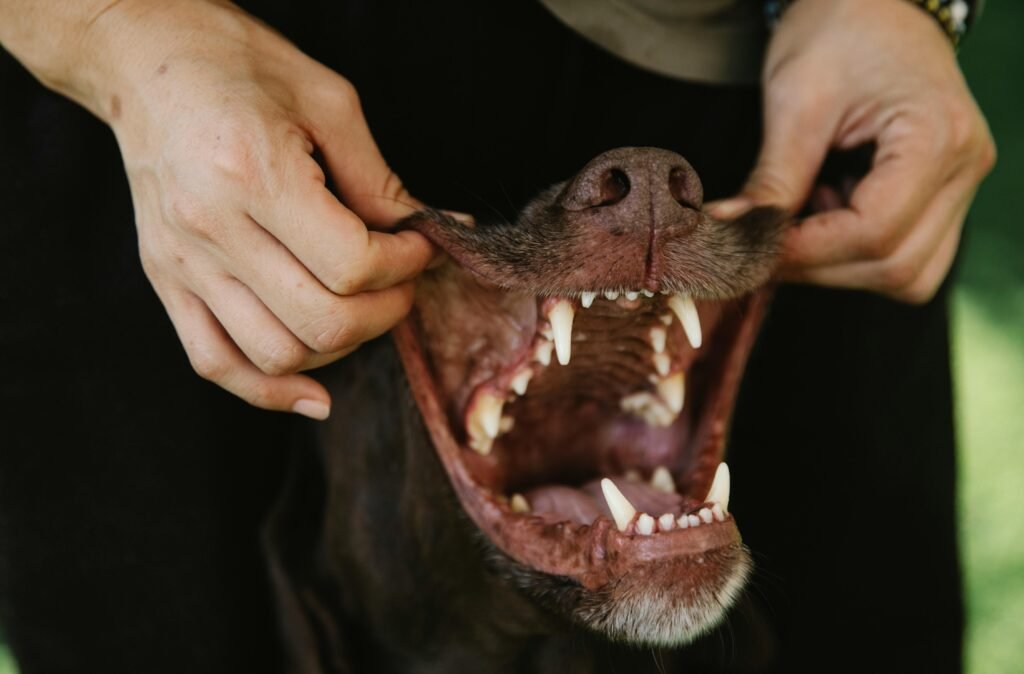
| BLOG OVERVIEW & KEY TAKEAWAYS Key Takeaway 1: Dental disease in dogs is not a cosmetic problem. Bacteria from infected gums enter the bloodstream and directly affect kidney, liver, and heart health. Ignoring your dog’s teeth is not just about bad breath. Key Takeaway 2: You do not need to achieve a perfect brushing session to make a meaningful difference. Three to four sessions per week using dog-specific toothpaste prevents enough plaque buildup to significantly slow the progression of dental disease. Key Takeaway 3: If your dog already has tartar buildup, home brushing will not remove it. Only a professional dental cleaning under anesthesia can address tartar. Home care prevents new buildup after a cleaning. |
The Mouth Nobody Is Looking At
You know what your dog’s coat looks like. You know their paws, their ears, their eyes. But when did you last look closely inside their mouth?
Most dog owners have not done it since the puppy phase, if ever. And most dogs are paying for that gap in a very specific way.
By age 3, approximately 80% of dogs have some form of periodontal disease. By age 5, most untreated dogs have significant tartar buildup, gum recession, and tooth root infection. By the time owners notice something is wrong, it has usually been building for years.
The part that surprises most people is this: dental disease does not stay in the mouth. It travels. This guide explains why that matters and what to actually do about it.
More dog health guides on the Shopping With Pets blog. Learn about us at About Me.
Why Your Dog’s Teeth Affect Their Whole Body
The gum tissue is rich with small blood vessels. When periodontal disease develops and bacterial infection sets in, those bacteria enter the bloodstream through the inflamed gum tissue. Every time your dog’s heart beats, blood circulates through those infected pockets and carries bacteria to the kidneys, liver, and heart valves.
Veterinary research has documented the association between severe periodontal disease and heart valve changes, chronic kidney inflammation, and liver disease. These are not theoretical concerns. Vets see the consequences regularly in dogs whose owners were not aware of the connection.
A dog with a clean mouth is not just a dog with fresh breath. They are a dog with a significantly lower bacterial load affecting their entire body.
What Is Happening in Your Dog’s Mouth
Plaque: The Daily Target
Within hours of eating, a sticky film of bacteria forms on the tooth surfaces. This is plaque. Soft, invisible, and completely removable by brushing. This is what you are fighting when you brush your dog’s teeth. Miss it for 24 to 36 hours and it starts to calcify.
Tartar: What Plaque Becomes
Plaque absorbs minerals from saliva and hardens into tartar. Tartar is rough, porous, and the texture of cement. It cannot be removed at home. It also provides a rough surface where more bacteria accumulate, accelerating the cycle.
Once tartar is present, the only removal option is a professional dental cleaning under anesthesia.
Periodontal Disease: What Follows
The bacteria in plaque and tartar infect gum tissue. The gum pulls away from the tooth, forming pockets where more bacteria collect. Over time the bone supporting the tooth erodes. Teeth loosen and fall out. In advanced cases, bone loss can be severe enough to fracture the jaw.
Stages 1 and 2 of periodontal disease are reversible with treatment. Stages 3 and 4 cause permanent structural damage.
How to Brush Your Dog’s Teeth
Products You Need
Dog-specific toothpaste is non-negotiable. Human toothpaste contains fluoride, which is toxic to dogs when swallowed. Many brands also contain xylitol, which is extremely toxic. Dog toothpaste is flavored in ways dogs accept: chicken, beef, peanut butter, vanilla mint.
For the applicator, a soft-bristled dog toothbrush or a rubber finger brush both work. Look for products carrying the Veterinary Oral Health Council (VOHC) seal, which indicates proven efficacy in clinical trials.
Starting Without Fighting
Jumping straight to brushing creates resistance. Take a week to build acceptance first.
- Day 1 to 3: Let your dog lick toothpaste off your finger. That is all. Make it positive.
- Day 4 to 5: Gently rub your finger along the outside of the gum line while giving the toothpaste. Let them get used to pressure on their gums.
- Day 6 to 7: Introduce the brush with toothpaste. Touch it to the outside of the front teeth and immediately reward.
- Week 2 onward: Begin actual brushing. Start with the upper back teeth where tartar accumulates most. Expand from there as your dog tolerates it.
The Technique
Hold the brush at a 45-degree angle to the gum line. This directs bristles to clean the tooth surface and just below the gum margin simultaneously. Use small circular or short back-and-forth strokes.
If you can only brush the outer surfaces of the upper back teeth, do that. Partial brushing is dramatically more effective than no brushing. The perfect routine that you do not actually do is less valuable than an imperfect routine done consistently.
Frequency
Daily is the gold standard because plaque re-establishes within 24 to 36 hours. Three to four times per week is the practical target for most owners and still provides meaningful protection. Less than three times per week reduces the preventive benefit significantly.
Products Beyond the Brush
VOHC-Approved Dental Chews
Not all dental chews do anything useful. Products with the VOHC seal have clinical data confirming they reduce plaque and tartar. Greenies, Virbac CET chews, and OraVet hygiene chews carry this certification. They work mechanically through chewing and in some cases enzymatically. They supplement brushing but do not replace it.
Water Additives
Added to the water bowl, these contain antimicrobial agents that reduce bacterial load in the mouth. Easiest compliance tool for dogs who resist brushing. Lower effectiveness than brushing but better than nothing.
Dental Diets
Some prescription foods like Hill’s t/d are designed with kibble that creates a mechanical scrubbing action as teeth sink into each piece before it crumbles. Research supports meaningful tartar reduction. Ask your vet if a dental diet is appropriate.
Professional Cleanings
Even excellent home care does not eliminate the need for professional dental cleanings. Most dogs benefit from annual cleaning under anesthesia, which is the only way to scale below the gum line where periodontal disease lives.
Anesthesia-free dental cleanings remove visible surface tartar but cannot address subgingival bacteria. Veterinary dental organizations do not recommend them as equivalent to proper dental care.
Modern veterinary anesthesia for healthy adult dogs is low-risk. The systemic disease resulting from untreated dental disease carries significantly higher long-term risk.
Q&A
Q: My dog has terrible breath. Is that normal?
Some natural breath odor is normal. Severe halitosis, especially odors that smell like rotting meat or chemical compounds, indicates significant bacterial infection. It is one of the most consistent signs of advanced periodontal disease. Get it evaluated.
Q: What breeds have the worst dental problems?
Small and toy breeds have disproportionately high rates of dental disease because their teeth are often crowded in a smaller jaw. Brachycephalic breeds like Bulldogs, Pugs, and Frenchies face the same issue. Greyhounds have notably thin enamel. These breeds need more frequent dental attention from an early age.
Q: My dog is 10. Is it too late to start brushing?
It is never too late. You will not reverse existing damage but you can slow further progression meaningfully. Before starting a home care routine on an older dog, a vet dental exam to assess the current state is worthwhile. Brushing inflamed or infected gum tissue can be painful for the dog and may require professional treatment first.
Final Thought
Dental care is boring. Nobody gets excited about it. But it is one of the highest-impact, lowest-cost health investments you can make for your dog over their lifetime.
Three sessions per week, the right toothpaste, a VOHC chew daily, and annual professional cleanings. That routine gives most dogs a dramatically better health trajectory than the 80% norm.
Start tonight. One minute is better than zero.
More guides on the Shopping With Pets blog.
| DISCLAIMER The content in this article is for general informational and educational purposes only. It is not veterinary medical advice. Always consult a licensed veterinarian before making any decisions about your dog’s health, diet, medication, or care. Shopping With Pets and its owners are not liable for any damages, losses, or adverse outcomes resulting from reliance on information published on this site. Every dog is different. In a pet health emergency, contact your veterinarian or an emergency animal hospital immediately. |
Sources:
- Veterinary Oral Health Council (VOHC), Accepted Products for Dogs
- American Veterinary Dental College, Periodontal Disease
- American Animal Hospital Association, Dental Care Guidelines