
| BLOG OVERVIEW & KEY TAKEAWAYS Key Takeaway 1: Over-bathing is as problematic as under-bathing. Stripping a dog’s natural skin oils causes the skin to overproduce sebum, leading to faster odor return, dry skin, and increased susceptibility to skin infections. Key Takeaway 2: The right bathing frequency depends on coat type, skin condition, and lifestyle. Most dogs with normal skin fall in the four to six week range. Dogs with skin conditions or active outdoor lifestyles may need more or less. Key Takeaway 3: The products matter as much as the frequency. A dog’s skin pH is significantly different from human skin pH. Human shampoos disrupt the skin barrier and should never substitute for dog-specific products. |
More Baths Does Not Mean a Cleaner Dog
This is the misconception that costs a lot of dogs their skin health.
A dog’s skin produces natural oils called sebum. These oils hydrate the skin, protect the skin barrier, condition the coat, and regulate the local microbiome of bacteria that keeps pathogens from establishing. Strip those oils too often and the skin panics. It overproduces sebum to compensate. The result is a greasier coat, faster odor return, and skin that is actually more vulnerable than before you started bathing more frequently.
The goal is not maximum cleanliness. The goal is appropriate cleanliness that works with your dog’s skin biology rather than against it.
More guides on the Shopping With Pets blog. Learn about us at About Me.
The pH Factor: Why Human Shampoo Is a Problem
Human skin has a pH of approximately 5.5, which is mildly acidic. Dog skin sits around 6.2 to 7.4, significantly closer to neutral. Shampoos are formulated to match the pH of the skin they are designed for.
Using a human shampoo on a dog disrupts the acid mantle of the skin, which is the protective film that regulates bacterial populations and moisture retention. The disruption does not cause immediate visible damage, but with repeated use it progressively impairs the skin barrier, making dogs more prone to irritation, dryness, and secondary infections.
Baby shampoo is milder than adult human shampoo but still has the wrong pH for dogs. Keep dog-specific shampoo on hand.
How Often by Coat Type
Short, Smooth Coats
Beagles, Boxers, Dalmatians, Weimaraners, Boston Terriers.
Smooth coats distribute sebum efficiently and repel surface dirt relatively well. They require the least frequent bathing of all coat types.
Typical range: Every four to six weeks for a normal indoor dog. Every two to three weeks for dogs with active outdoor lifestyles who regularly get dirty.
Double Coats
German Shepherds, Huskies, Golden Retrievers, Labrador Retrievers, Border Collies.
The dense undercoat traps debris, moisture, and odor more than single coats. Shedding twice annually can make bathing more complex because loose undercoat needs to be removed during or after the bath.
Typical range: Every four to six weeks. During seasonal coat blows, more frequent bathing paired with thorough blow-drying significantly accelerates the shed and prevents the musty damp smell from trapped undercoat.
Critical note: Never let a double coat air dry. Moisture trapped in the dense undercoat creates the conditions for hot spots and fungal skin infections within 24 to 48 hours. Blow dry thoroughly every time.
Long, Silky Coats
Yorkshire Terriers, Maltese, Afghan Hounds, Cocker Spaniels.
Long coats pick up everything, mat quickly, and develop odor faster than shorter coats. Regular brushing between baths is as important as the baths themselves for maintaining skin health.
Typical range: Every two to four weeks. Brushing three to five times per week between baths prevents the mats that trap moisture and debris against the skin.
Curly and Wavy Coats
Poodles, Goldendoodles, Labradoodles, Bichon Frises.
Curly coats retain dead hair rather than shedding it, which means the coat requires more active management. Mats form quickly and trap everything against the skin.
Typical range: Every three to four weeks. Professional grooming every six to eight weeks is typically necessary. Daily or every-other-day brushing between baths is essential, not optional.
Hairless Breeds
Chinese Crested, Xoloitzcuintli, American Hairless Terrier.
Without a coat to distribute oils and protect skin, hairless breeds are vulnerable to pore blockages, acne-like skin lesions, and sunburn. They need more frequent attention but with very gentle, moisturizing products.
Typical range: Weekly to bi-weekly bathing. Followed by moisturizing with a vet-approved product. Sunscreen for outdoor time.
When Lifestyle Changes the Math
Swimming Dogs
Frequent swimmers do not need full baths as often as you might think, but they do need thorough fresh water rinses after every swim. Pool water chlorine dries and damages coats over time. Lake and river water carries bacteria and organic matter.
Rinse after every swim. Full baths every two to three weeks. More if your dog rolls in things between swims.
Dogs with Skin Conditions
Allergic skin disease, seborrhea, yeast dermatitis, and other dermatological conditions often require more frequent medicated bathing as part of the treatment protocol. Your vet will specify frequency and shampoo type.
Medicated shampoos require a specific contact time, usually 10 minutes, to be effective. Lathering and rinsing immediately defeats the purpose of the medication.
Dogs Who Mostly Stay Indoors
A small dog on mostly indoor surfaces who rarely rolls in anything may genuinely go six to eight weeks without a bath and show no odor or skin issues. There is no rule requiring bathing on a fixed schedule if your dog’s coat is clean and their skin is healthy.
The Bath Itself: Getting It Right
Water Temperature
Lukewarm. Similar to what you would use for a baby bath. Hot water dries out skin and is uncomfortable for dogs. Cold water is obviously unpleasant. Test on your wrist. If it feels warm but not hot, it is right.
Shampoo Application
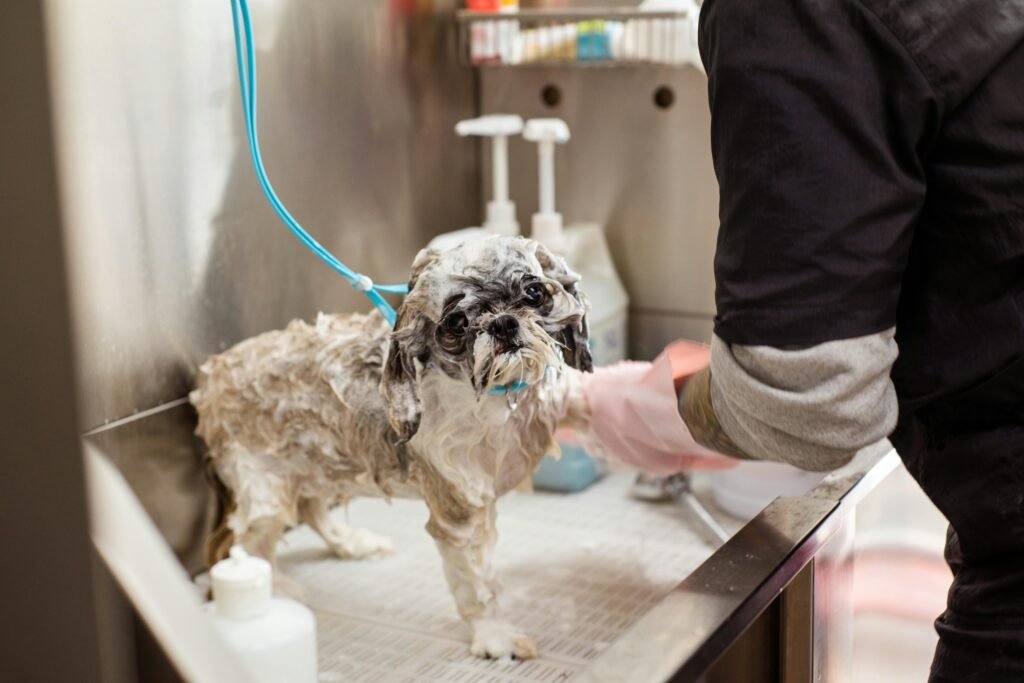
Work the shampoo all the way down to the skin, not just through the coat surface. This is especially important for thick or double coats where the skin may not get reached with a surface application. Rinse for significantly longer than you think is necessary. Shampoo residue left on the skin causes itching and inflammation, and is responsible for more post-bath scratching than people realize.
Drying
Towel dry first, then use a dog hair dryer or a human dryer on low cool setting while brushing through the coat. Do not let dogs go outside or into cold spaces while still damp. Moisture sitting against skin in cool conditions invites bacterial and fungal growth.
Signs You Are Off Schedule
Bathing Too Often
- Dry, flaky skin in the days after a bath
- Coat that looks dull or stripped after washing
- More scratching after baths than before
- Odor returning faster than it did before you increased frequency
Not Bathing Enough
- Persistent odor that is present even when your dog has not been outside
- Visible grease or buildup at the skin surface
- Matting in longer coats from oil and debris accumulation
- Skin irritation or hot spots developing in areas of debris buildup
Q&A
Q: My dog smells bad a day after a bath. Why?
A strong odor that returns within one to two days of bathing is almost never a bathing frequency problem. It is a skin condition problem. The most common culprits are yeast overgrowth, bacterial skin infection, anal gland issues, and ear infections. More baths will temporarily reduce the smell but will not address the cause. A vet visit is more useful than another bath.
Q: Can I use dry shampoo on my dog between baths?
Dog-specific dry shampoo can help with light surface odor between baths but does not clean the skin or coat in any meaningful way. It is a temporary measure, not a substitute for a real bath when one is due.
Q: My dog shakes during baths and seems very stressed. What can I do?
Build positive association very gradually. Start with your dog simply standing in a dry tub while getting treats. Then add water running nearby. Then add water on just the paws. Progress at your dog’s pace. For dogs with severe bathing anxiety, a groomer who specializes in anxious dogs, or a consultation with your vet about anti-anxiety options, can make a significant difference.
Final Thought
Bathing your dog well is less about how often you do it and more about doing it correctly when you do.
Right shampoo. Right temperature. Thorough rinse. Complete drying. Frequency matched to coat type and lifestyle. Get those things right and your dog’s skin and coat will show it.
More guides on the Shopping With Pets blog.
| DISCLAIMER The content in this article is for general informational and educational purposes only. It is not veterinary medical advice. Always consult a licensed veterinarian before making any decisions about your dog’s health, diet, medication, or care. Shopping With Pets and its owners are not liable for any damages, losses, or adverse outcomes resulting from reliance on information published on this site. Every dog is different. In a pet health emergency, contact your veterinarian or an emergency animal hospital immediately. |
Sources:
- American Kennel Club, Dog Grooming Tips
- Merck Veterinary Manual, Skin Care and Grooming for Dogs
- Tufts University Cummings Veterinary Medical Center, Dog Coat and Skin Health