
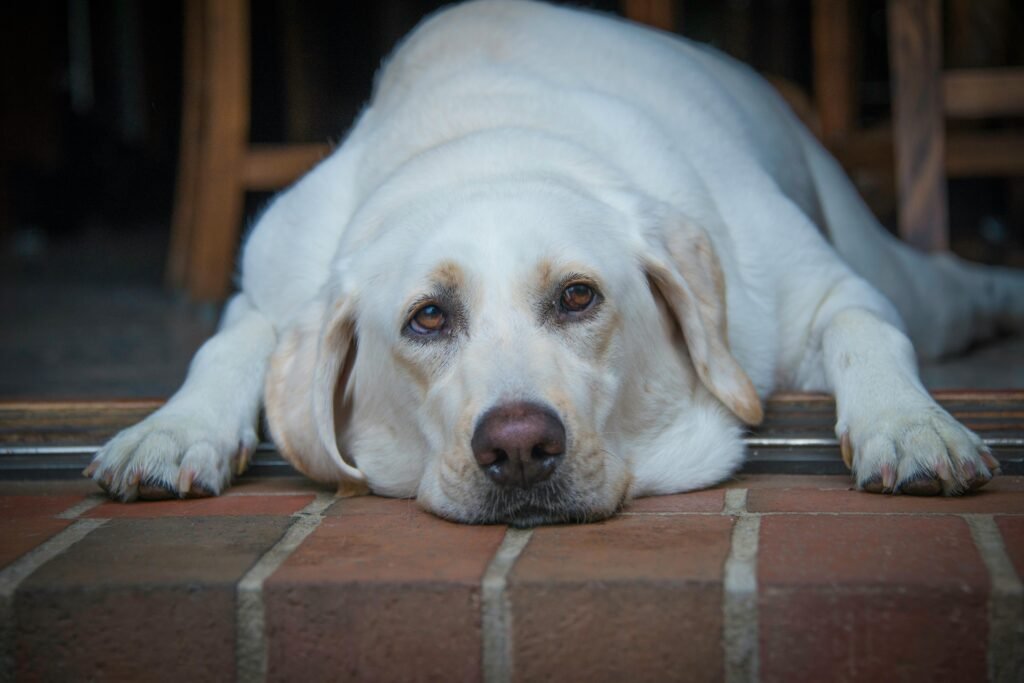
| BLOG OVERVIEW & KEY TAKEAWAYS Key Takeaway 1: Over 55% of dogs in the United States are overweight or obese according to the Association for Pet Obesity Prevention. Most of their owners describe them as a “normal” weight. The gap between perceived and actual weight status is one of the biggest health problems in pet care today. Key Takeaway 2: Extra weight in dogs accelerates joint deterioration, increases cancer risk, raises blood pressure, worsens breathing problems, and reduces life expectancy by an estimated 2 years. Weight management is not cosmetic. It is medical. Key Takeaway 3: The most reliable at-home assessment is the rib check, not your dog’s scale weight. You should be able to feel individual ribs easily without pressing hard. If you cannot, your dog is carrying too much weight. |
Most Overweight Dogs Have Owners Who Think They Are Fine
The Association for Pet Obesity Prevention surveys thousands of American dog owners every year. In their most recent data, over 55% of US dogs were classified as overweight or obese by their veterinarian.
When the same owners were asked whether their dog was at a healthy weight, the majority said yes.
This is not negligence. It is a perception problem. Overweight dogs have become so normalized in our culture that many owners have genuinely lost the reference point for what a healthy dog body actually looks and feels like.
This guide gives you that reference point back, and then tells you what to do with it.
More guides on the Shopping With Pets blog. Learn about us at About Me.
Why This Is a Bigger Deal Than It Looks
People sometimes frame dog weight as a cosmetic concern. It is not.
The research on the health consequences of excess weight in dogs is substantial:
- Osteoarthritis: Extra weight dramatically accelerates the breakdown of joint cartilage. A dog who is two pounds overweight is not slightly uncomfortable. They are placing significantly greater impact force on every joint with every step.
- Cancer: Obesity is associated with higher rates of several cancers in dogs, including bladder cancer and certain tumors.
- Diabetes: Particularly in dogs fed high-carbohydrate diets who are also overweight, insulin resistance and diabetes risk increases substantially.
- Heart and respiratory disease: Excess weight strains the cardiovascular system and makes breathing difficult, particularly in brachycephalic breeds.
- Reduced life expectancy: Research has found that dogs maintained at an ideal weight live an estimated 2 years longer than overweight dogs of the same breed.
Two years. That is not a small number for owners who love their dogs.
How to Actually Assess Your Dog’s Weight
The Rib Check
This is the most reliable at-home assessment and it does not require a scale.
Run your fingers along the side of your dog’s ribcage with gentle pressure, about the same pressure you would use to feel through a layer of bed sheet.
- You can easily feel individual ribs with light pressure and there is no fat pad between the skin and the ribs: Your dog may be underweight. Consult your vet.
- You can feel individual ribs easily without pressing hard, there is a thin layer of padding but the ribs are distinct: Ideal weight.
- You have to press moderately hard to feel the ribs and there is noticeable padding between skin and bone: Your dog is likely overweight.
- You cannot feel individual ribs even with firm pressure: Your dog is obese. Veterinary weight management guidance is appropriate.
The Visual Check From Above
Stand directly above your dog and look down. You should see a visible waist behind the ribcage that narrows before the hips. A dog who looks rectangular from above with no waist definition is carrying excess weight.
The Side View Check
Looking from the side, you should see an abdominal tuck: the belly line rises from the ribcage toward the hips. A belly that hangs level with or below the ribcage indicates excess abdominal fat.
Why Dogs Become Overweight
Overfeeding
The single most common cause. Feeding guidelines on dog food bags are deliberately generous. They are designed to cover the highest end of the activity range for that weight class. Most dogs, particularly indoor pets with moderate activity, need 20 to 30% less than the bag recommends.
Add treats into the daily calorie count. Most owners do not. A 10-pound dog who receives 3 small commercial treats per day has consumed the caloric equivalent of a full extra meal by the end of the week.
Table Scraps and Human Food
Human food is calorie-dense in ways that dog food is not. Even small amounts add up quickly. A small piece of cheese given daily to a small dog can represent 10 to 20% of their daily calorie budget.
Inadequate Exercise
A dog whose calorie intake is normal for an active dog but who is actually sedentary will gain weight on that amount. Exercise needs change with age, and calorie intake often does not adjust accordingly.
Medical Conditions
Hypothyroidism and Cushing’s disease are both associated with weight gain in dogs despite normal food intake. If your dog is gaining weight despite reasonable food amounts and activity, ask your vet to test for these conditions before assuming it is purely a feeding issue.
How to Help Your Dog Lose Weight Safely
Get a Baseline
Weigh your dog at the vet and establish a target weight together. Your vet can calculate an appropriate daily calorie target. Trying to do this without professional input leads to either too aggressive restriction (which causes muscle loss) or too gradual reduction (which produces no result).
Measure Everything
Most owners who free-feed or estimate portion sizes are significantly overfeeding. Use a kitchen scale for kibble rather than measuring cups, which are imprecise. Measuring cups of kibble can vary by 20 to 25% depending on how tightly packed they are.
Change What You Measure, Not Just the Amount
High-fiber, lower-calorie foods leave dogs feeling more satisfied on fewer calories than high-fat, calorie-dense foods. Your vet may recommend a specific weight management food or a prescription diet for dogs who need meaningful weight loss.
Treat Calories Count
Treats should not exceed 10% of total daily calorie intake. Swap high-calorie treats for low-calorie options: baby carrots, green beans, cucumber slices. Dogs do not know the difference in value based on calorie count. They respond to the act of receiving something from you.
Increase Movement Gradually
Do not suddenly double your dog’s exercise. An overweight dog with compromised joints needs gradual progression. An extra 10 minutes of walking per day is a meaningful start. Swimming is excellent low-impact exercise for overweight dogs with joint involvement.
Track Progress Monthly
Weight loss in dogs should be gradual: approximately 1 to 2% of body weight per week. Faster than this risks muscle loss rather than fat loss. Slower may indicate the calorie reduction needs adjustment. Monthly weigh-ins help you stay on track.
Q&A
Q: My dog begs constantly and seems hungry all the time. How do I manage this?
Satiety and hunger signals in dogs are partly driven by habit and partly by food composition. High-fiber foods increase the physical sensation of fullness. Feeding multiple smaller meals rather than one large one reduces the duration of the hungry period between meals. Most importantly: a dog who begs is not necessarily a dog who is hungry. Many dogs beg opportunistically for as long as it has ever worked. Consistency in not responding to begging is the only thing that changes it.
Q: My vet said my dog is overweight but they seem happy and active. Do I really need to do something?
Yes. The consequences of excess weight in dogs are largely internal and invisible until they become significant. Joint damage accumulates silently for years before mobility becomes visibly affected. Organ changes develop without external symptoms until they are advanced. A dog can be overweight and seem happy and active right up until they are not. The time to act is before the consequences are visible.
Q: My dog lost weight and then gained it back. Is there a way to maintain?
Maintenance after weight loss requires the same portion discipline that produced the loss. The mistake most owners make is gradually reverting to previous habits once the goal weight is reached. Weigh your dog monthly after achieving goal weight and adjust portions when you see the number climbing. Weight management is ongoing, not a destination.
Q: Are weight management dog foods worth it?
Many are, particularly prescription weight loss diets from brands like Royal Canin and Hill’s that have clinical research supporting their efficacy. Over-the-counter “light” foods vary considerably in quality and calorie reduction. Check the calorie content on the label and compare to your dog’s daily target rather than relying on the marketing language on the bag.
Final Thought
The extra weight your dog carries is not just extra weight. It is extra strain on every joint, every organ, and every system in their body, every day.
The good news is that it is fixable. Weight loss in dogs is achievable with consistent portion control and veterinary guidance. And the results, more energy, better mobility, longer life, are visible within weeks of meaningful weight reduction.
Your dog does not know they are being managed toward a healthier weight. They just know that life feels better.
More health guides on the Shopping With Pets blog.
| DISCLAIMER The content in this article is for general informational and educational purposes only. It is not veterinary medical advice. Always consult a licensed veterinarian before making any decisions about your dog’s health, diet, medication, or care. Shopping With Pets and its owners are not liable for any damages, losses, or adverse outcomes resulting from reliance on information published on this site. Every dog is different. In a pet health emergency, contact your veterinarian or an emergency animal hospital immediately. |
Sources:
- Association for Pet Obesity Prevention (APOP), National Pet Obesity Survey 2024
- Kealy RD et al., Effects of diet restriction on life span and age-related changes in dogs, JAVMA (2002)
- American Veterinary Medical Association, Pet Obesity
- Merck Veterinary Manual, Obesity in Dogs